Wolf's Foam & Fly Fishing

With the trout season (on rivers) about to draw to a close - and the Grayling season starting to gain a little traction. I thought it would be a good idea to look forward to targeting either those late-season trout or early-season Grayling.
Targeting trout (or Grayling) in these conditions usually means 3 things:
-
You will have to go searching for the fish.
-
You will be using nymphs, and they will
-
Need to be presented somewhere near the bottom
That usually means nymphs equipped with some form of bead - usually Tungsten.
Tungsten is most commonly found in lightbulb filaments (and armour-piercing munitions - see below), but us fly anglers have used one of its properties to our advantage - tungsten is a very dense mineral, and when powdered and formed into beads (usually by metal injection moulding), they can weigh up to four times that of a similar-sized brass bead.
TL;DR - Too Long; Didn't Read
I know that some of you are pressed for time and save our emails to read later in the day, by this time our selections are sometimes sold out (I get lots of emails from customers pointing this out to me).
I've put this section at the beginning, so you can grab your flies now - and save reading my musings for later, safe in the knowledge that you have already secured your limited-run CdC Red-Neck Tungsten Pupa Selection.
This email is all about our NEW CdC Red-Neck Tungsten Pupas (In Brown, Grey & Olive) and how tungsten has transformed the 'nymphing' game - especially when the fish are not looking up in Autumn/Winter:

*** Grab yours today, these never hang around for long! ***
Tungsten - "How Much!"
I promise I'm not going to get political, but this is why Tungsten prices have shot up by up to 600% ...

We are now paying 5X the price we previously paid for Tungsten beads! - This has unfortunately filtered into the final price of the finished fly - we could have compromised on the quality of the other materials we use (hooks, etc.), but we want to always provide the best flies possible.
Even so, we've tried to keep the price down as much as we can - they're still really good value when compared to some of our competitors (and these are all tied on AHREX hooks - the very best you can buy)!
Before I get onto the nymphs themselves - and which ones to use - I want to take you back to school for a History (and Chemistry) lesson ...
When you look up the element Tungsten in the periodic table, you will see it has the symbol 'W'. This is due to the element historically being known by two different names - Wolfram & Tungsten, officially the name Wolfram was dropped in 2005.
The name 'Wolfram' comes from a different mineral, wolframite, which also has a high content of the element we now call tungsten. Wolfram is believed to be derived from the German for 'wolf's foam'. Many centuries ago, mid-European tin smelters observed that when a certain mineral was present in the tin ore, their yield of tin was much reduced. They called this mineral 'wolf's foam' because, they said, it devoured the tin much like a wolf would devour a sheep!
Whereas the word Tungsten is derived from the old Swedish name for 'heavy stone', a name given to a known tungsten-containing mineral.
Tungsten is the name which has now stuck - I'm not too worried about what it's called, all I know is that fishing in the colder months would be much more difficult without it!
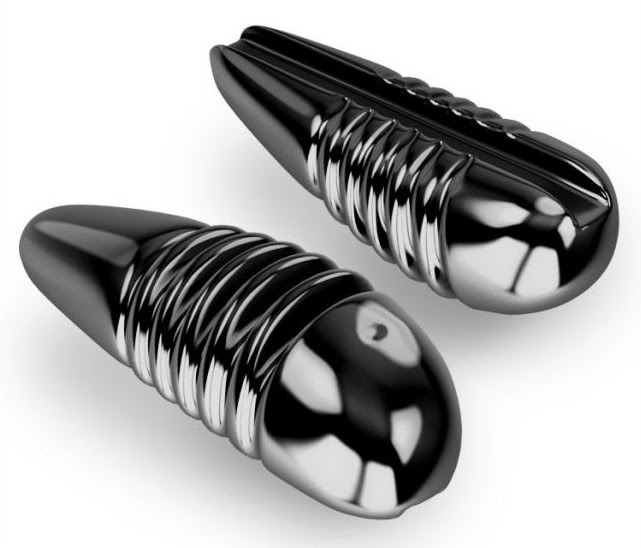
As well as its obvious weight advantage, the real properties which make tungsten ideal for nymphs are:
-
Its Compact Size: Tungsten beads are small and can be used to add weight without significantly increasing the overall size of the fly. This is particularly important in smaller nymphs, where imitating natural insect sizes is crucial for success.
-
Its Versatility: Tungsten beads are available in various sizes, shapes, and colours, providing fly tyers with a wide range of options to create different nymph patterns. This versatility allows us to match the specific characteristics of the insects we are trying to imitate.
-
Improved Sensitivity: The density of tungsten allows for better sensitivity when fishing nymphs and other subsurface patterns. We can more easily detect subtle takes or changes in the behaviour of the nymph, leading to increased hook-up rates.
-
Their Consistency: Tungsten beads are known for their consistency in size and weight, providing a reliable option for fly tyers. This consistency helps maintain the balance and performance of the nymph in the water.

Generally, when targeting trout in the later parts of the river season, keep in mind the following:
-
The faster and deeper the river, the heavier the nymph
-
Target the area behind any type of structure in the water (think boulders, bridge supports, & weed beds)
-
Where allowed, it’s better to fish a team of flies, with the heaviest fly on the point.
I've put the first point above in bold, as it's the most important part.
So, which nymph patterns should be your first choice?
Our NEW CdC Red-Neck Tungsten Pupas
These grew directly out of our existing Tungsten Nymph range, which has become our best-seller for both Trout and Grayling. There's one detail about how these are weighted that I'll come back to properly, because it changes how you can rig them, and it's not something you'd guess just by looking at a photo.
Each size in our selection carries a specific tungsten bead diameter, from 4.0mm down to 2.6mm, which means the sink rate is deliberate rather than accidental. Get the pairing wrong and you're back to fishing blind in the bottom third of the water column, which is exactly where Trout and Grayling are holding this time of year.

This pattern style is one I rely on more than almost any other on the river. It represents a broad range of natural river nymphs rather than one specific insect, which is part of why it works across so many conditions. Fished on its own, or as part of a duo using the New Zealand Rig, it's proven itself time and again for both Trout and Grayling.
Our selection gives you 16 flies in total, two each of:
-
CdC Red-Neck Pupa in Brown - Sizes 12 and 14
-
CdC Red-Neck Pupa in Grey - Sizes 10, 12 and 16; and
-
CdC Red-Neck Pupa in Olive - Sizes 10, 12 and 16
Every one is tied on the AHREX FW541 barbless nymph hook, which is manufactured specifically for this style of fishing The sparse CdC collar on each pattern is there to trap air and mimic the ascending nymph, which is one of the more convincing triggers you can offer a fish that's used to seeing the real thing.
Click any image or button in this email to go directly to the nymphs.
*** Stock up on these while you can, they always sell out fast! ***

Because each size has its own precise tungsten bead, from 0.60g down to 0.16g, you can genuinely Euro Nymph with intent rather than guesswork. Try a size 10 or 12 on the dropper with a size 16 on the point in a really heavy flow, and both flies will hold their depth close to the riverbed where the fish are feeding. That's the kind of rigging precision that usually takes years to work out by trial and error, and here it's already built in.


When you order the CdC Red-Neck Tungsten Pupa Selection, you'll receive 16 flies in total. Every fly is tied with a woven body in its named colour, a sparse CdC collar, a red thread neck, and a tungsten bead in silver, gold or gunmetal depending on the pattern, each tied on the barbless AHREX FW541 nymph hook.
Bead sizes range from 4.0mm on the size 10s down to 2.6mm on the size 16s, giving you precise, predictable weight across the whole selection. The full set is priced at only £36.00 and is delivered FREE of charge to anywhere within the UK in our eco-friendly packaging.
Alternatively, you can also buy our CdC Red-Neck Tungsten Pupa Selection in one of our Slimline Silicone fly boxes for an additional £10:

Or, should you want to buy any of our CdC Red-Necks individually, you can find them all here for £2.50 each:
I hope this selection earns its place in your box , as it has mine, this season. If you've got any questions about how to rig these or which sizes to pair together for your local water, just hit reply and ask away, I'm always happy to talk tackle.
Go on ... fill your boots - and your Autumn Trout/Grayling fly boxes - we've only limited quantities of these, so grab yours whilst you still can!
Tight lines
P.S. Here's a quick tip on rigging your nymphs: match your dropper and point fly weights to the flow, not just the depth. A size 10 or 12 on the dropper with a size 16 on the point works well in heavy water because the heavier fly anchors the rig while the lighter one drifts more naturally near the bottom.
If you're new to Euro Nymphing, start by counting down each fly separately in slow water so you get a feel for how the different bead sizes sink. It'll help you judge depth by feel rather than guesswork once you're on faster water.
Barbless hooks like the AHREX FW541 still need a firm, steady hookset rather than a hard strike. Keep tension through the fight and you'll land far more fish than you lose.