Morning,
There's a moment in mid-April that I genuinely look forward to.
It usually happens around mid-morning. The temperature's climbed just enough, the sun's got a bit of warmth in it, and somewhere above the water - river or reservoir, it doesn't matter - you start to notice the first proper surface activity of the year.
Not the occasional hopeful nose, but proper rising. Confident. Rhythmic. The kind that makes you forget you've a Pork Pie in your pocket!
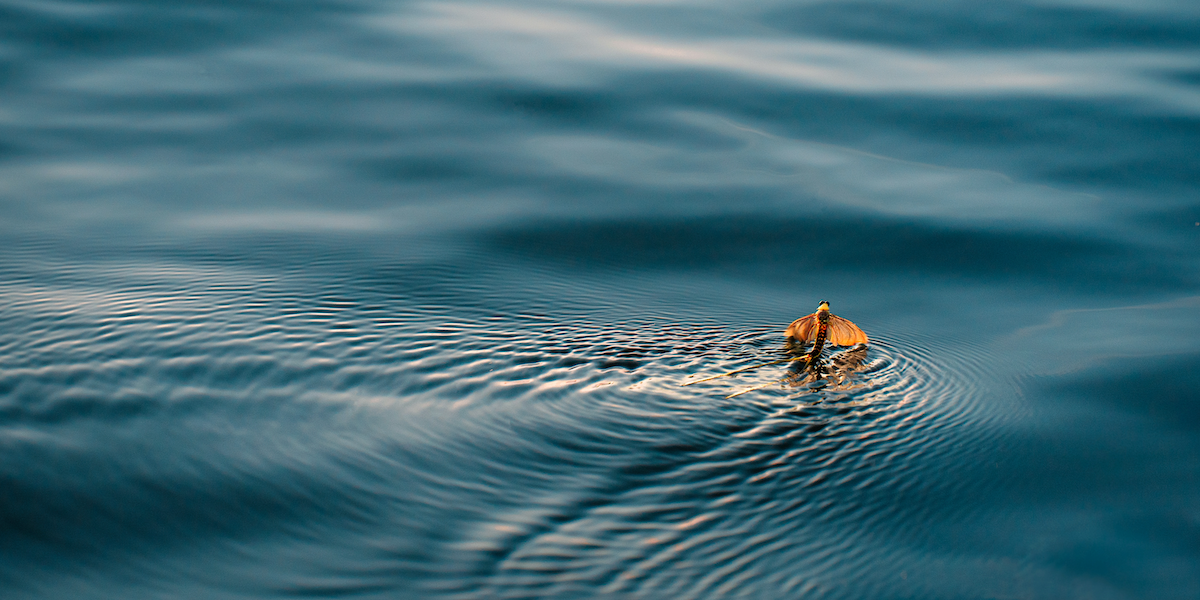
If you're a dry fly angler, this is the time you've been dreaming of through Winter.
The question, of course, is what do you reach for.
In April, the hatch can be maddeningly mixed - especially before the Hawthorn flies make an appearance (more on those next week). You might have Large Dark Olives one minute, a scattering of midges the next, and the odd early sedge creeping across the surface by late afternoon.
Fish are feeding on the film but they're not always locked onto one thing. What you need is a fly with a bit of flexibility about it - something that reads as "emerging insect" rather than insisting on being one specific thing.
Which is exactly what a Klinkhamer does so well. Here's an original tied by the man himself (Hans van Klinken - on one of our 9ct Gold hooks):

Our Foam Klinkhamer Selection is back in stock - just in time!
We've had a lot of people waiting on these, so I won't string it out - grab yours here.
Scruffy but deadly and floats like a cork - Sixteen Foam Klinkhamers, four patterns, two of each in sizes 14 and 18.

Hare's Ear Foam Klinkhamer - a bit rougher, a bit buggy. The one I'd lean on for fish that are being selective, or stillwater fish working just sub-surface.

Black Foam Klinkhamer - underrated for April evenings, particularly on stillwaters when midges are hatching and the light's going.

Adams Foam Klinkhamer - the utility player. Suggests just about everything without committing to anything. Brilliant when you can't pin down what they're taking.

Olive Foam Klinkhamer - your go-to when olives are on the menu, which in April on most UK rivers, they will be.
The foam post is the thing that separates these from a standard Klinkhamer. High-density, exceptional buoyancy - you're not going to lose it in the surface film even after several fish. The visibility is genuinely useful too, especially on broken water where a traditional parachute post can disappear entirely.
On stillwaters specifically - the Klinkhamer gets overlooked. Most people file it under "river fly" and leave it at that. But in April on a reservoir or lake, when buzzers are hatching and trout are intercepting emerging pupae just in the film, a size 18 Hare's Ear or Black Klinkhamer fished on a long leader and left to sit is a very serious option.
It occupies exactly the right zone - body hanging below the surface, post sitting proud above it. It's not imitating a buzzer, but trout don't always need to be asked politely.
One of the great difficulties in fishing smaller dry flies is the ability to quickly spot where your fly actually is, with our Foam Post Klinkhamer Selection of flies you will have no problem seeing them (the white posts show up extremely well against virtually any background - including water).
You will not miss a take with either The Foam Post Klinkhamer Selection - they save your eyesight!
All of these flies have been chosen for both their blank saving and high visibility.

Foam Post Klinkhamer Selection - A selection of 16 flies to save your eyesight! All of these flies have been chosen for both their blank saving and high visibility in all conditions. We've all been there; you're fishing on an evening in low light and you need something which will still catch, but importantly - you need to be able to see it!
Our selection of 16 barbless Foam Post Klinkhamers is now available for only £22, including free delivery to anywhere within the UK.
Please Note: These sold out quickly last time and we're not holding enormous stock - so if you've been meaning to restock your Klinkhamers ahead of the season proper, now's a sensible moment.
(for more detailed images please visit our website by clicking on any images or buttons above)
Go on ... you know you want to!
As always, all of our fly selections are delivered free of charge, anywhere within the UK.

April is the month fly fishing stops being theoretical. The season's been open a few weeks, you've shaken off the rust, and now the conditions are finally starting to play ball. But mid-April has its own personality - and if you fish it the same way you'd fish June, you'll leave the water wondering why it went quiet after a promising start.
Here are a few things worth bearing in mind:
Rivers:
Water temperature is still the master variable in April. On a cold, overcast morning, don't expect much on the surface before 10 or 11am at the earliest - the fish are there, but they're not committing. Resist the temptation to thrash the water with a dry before the conditions warrant it. A lightweight nymph fished through the likely lies will pick up fish that simply aren't ready to look up yet.
When the surface does switch on - and in mid-April it usually does, given a couple of hours of decent sun - pay attention to where fish are rising rather than rushing to cover the first one you see. Rising fish in April tend to position higher in the water column than later in the season, often in the slower water at the edge of the main current, or in the gentle glide just downstream of faster runs. These aren't the aggressive, splashy rises of high summer - they're considered, deliberate, and worth studying for a minute before you cast.
Approach low and slow. April rivers are often still carrying extra colour and flow from winter, but the fish have had weeks of clear, cold conditions by now and they're more alert than you'd think. A clumsy approach kills a good lie faster than a bad fly choice.
Stillwaters:
On reservoirs and lakes, April is a month of transition - and the fish haven't quite made up their minds yet. Early in the day they'll often still be holding deeper, particularly if overnight temperatures have been sharp. Don't start by flogging the margins; give it time.
By mid-morning, as the surface warms, you'll start to see fish working higher in the water. Watch for the tell-tale slow, shouldering rise that betrays a trout taking emerging buzzers just in the film - this is prime Klinkhamer territory, and it's worth having one already knotted on before you spot it rather than fumbling with cold fingers.
Wind direction matters more on stillwaters in April than most anglers give it credit for. A consistent breeze will concentrate surface food along a windward bank, and fish will follow it. If you're fishing a reservoir and it feels like there's nothing happening, walk the windward shore before you conclude it's a slow day - the difference between a blank and a memorable session is sometimes just a ten-minute walk and a change of angle.
Finally, don't ignore the shallows. As April progresses, trout begin to move onto the margins to feed, particularly in the warmer part of the afternoon. Light leader, long cast, and patience - dry fly fishing on still water in April rewards the angler who's prepared to wait rather than the one who's always moving.
Tight lines.